 how-to
7 Ways to Speed Up Vehicle Wrap Turnaround for Your Business
Quick Summary
Vehicle wraps usually take a few days to a few weeks, depending on three stages: printing, shipping and shop installation. Printing takes one to three business days, or 24 to 48 hours on rush lanes if the file is print-ready. Installation takes one to five business days, and booking the install bay when you place the print order removes the biggest source of delay.
- Printing takes one to three business days, or 24 to 48 hours on rush lanes.
- Ground shipping across the country commonly runs three to five business days.
- Flat cargo vans take one to two shop days; curved vehicles take three to five.
- Send a print-ready vector file on the first pass to avoid a reprint.
- Target road-ready at least five business days before a fixed launch date.
Table of Contents
- Fast Turnaround Vehicle Wraps for Small Business: Speed Up Your Order
- How Fast Vehicle Wraps Really Take From Order to Road
- Types of Vehicle Wraps and Which Coverage Fits Your Budget
- Commercial Vehicle Wrap Cost: What Drives the Price
- Vehicle Wrap Installation Time: Printing, Shipping, and Shop Work
- Small Business Vehicle Graphics That Get Built Fast
- Vehicle Wrap Design Steps That Protect Your Timeline
- Plan Your Rush Wrap Order With PRINTnMORE
- Frequently Asked Questions
Fast Turnaround Vehicle Wraps for Small Business: Speed Up Your Order
Last Updated: October 28, 2026
A vehicle wrap can turn a plain work van into a moving ad, but a late wrap can cost a campaign its launch date. Many small businesses assume a wrap takes weeks, while others expect it in a few days. The honest answer depends on where the time goes: printing, shipping, design approval and shop installation each add their own delay. This guide shows where the time goes and how to shorten it.
Full vehicle wraps typically cost $2,000 to $5,000, while decals range from $200 to $1,500, according to Big Visual Group's 2026 vehicle wrap pricing guide. Those figures shift with vehicle size, coverage and material, so treat them as a starting point rather than a quote.
How Fast Vehicle Wraps Really Take From Order to Road
Turnaround is not one number. A wrap moves through design, printing, shipping and installation, and each stage can run at a different speed. Some print shops advertise shipping in one to two business days, and one provider lists three-day delivery across the United States for rush orders, according to WePrintWraps wholesale wrap printing. Printing speed alone does not tell you when the van will be on the road.
Installation adds its own clock. Interstate Image says most quality wraps take one to five business days in the shop, per Interstate Image's wrap timeline guidance. Ask every provider for both numbers, print and install, before you commit to a date.
Types of Vehicle Wraps and Which Coverage Fits Your Budget
Coverage level is the fastest lever on both price and schedule. Providers typically offer window coverings, spot graphics, partial wraps and full wraps. SpeedPro's vehicle graphics options lists this range, which makes it easy to compare scope against budget.
Spot graphics and partial wraps need less material and less shop time than a full wrap. If the campaign only needs a logo, phone number and website on the doors, a partial wrap often meets the goal faster and for less money.
Commercial Vehicle Wrap Cost: What Drives the Price
Cost follows size, coverage, material and design work. A cargo van needs far more film than a compact sedan, and complex curves around wheel wells add labor. Rush scheduling can also raise the price, so ask about it before you approve the order.
Full Wrap vs. Partial Wrap Pricing
A full wrap covers most of the vehicle's painted surface. A partial wrap covers only the sections that carry your message. The gap in cost can be large, and the gap in shop time is usually just as large. For a fast campaign, a partial wrap that goes up in days can beat a full wrap that waits in the queue.
Vehicle Wrap Installation Time: Printing, Shipping, and Shop Work
Three stages drive the calendar, and each one has a different owner and a different failure mode. Understanding who controls what is the difference between a wrap that lands before your launch and one that misses it. For a closer look at next-day printing and delivery timelines for tight deadlines, see fast turnaround custom event signage ordering guide.
Printing. Once the design is approved and the file is print-ready, commercial print shops commonly turn film in one to three business days; rush lanes can compress that to 24-48 hours, but only when the file passes preflight on the first pass. A file that needs a reprint because of a missing bleed, low-resolution logo, or wrong color mode resets the clock. Ask your printer for their standard and rush print windows in writing before you approve the proof.
Shipping. Printed film usually ships rolled in a tube. Ground transit across the country commonly runs three to five business days; expedited air can cut that to one to two, at a higher freight cost. If your installer is local to the printer, arrange will-call pickup instead of shipping, it removes a transit day and the risk of a damaged tube. Confirm the ship date, carrier, and tracking number on the order confirmation, not verbally.
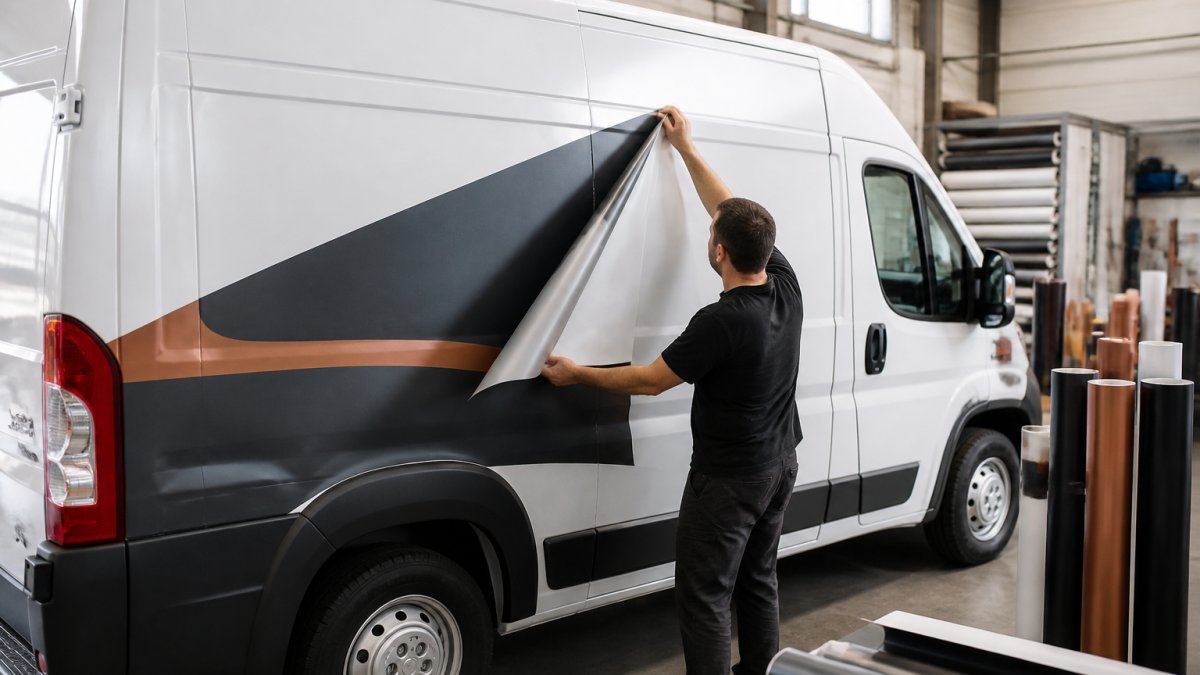
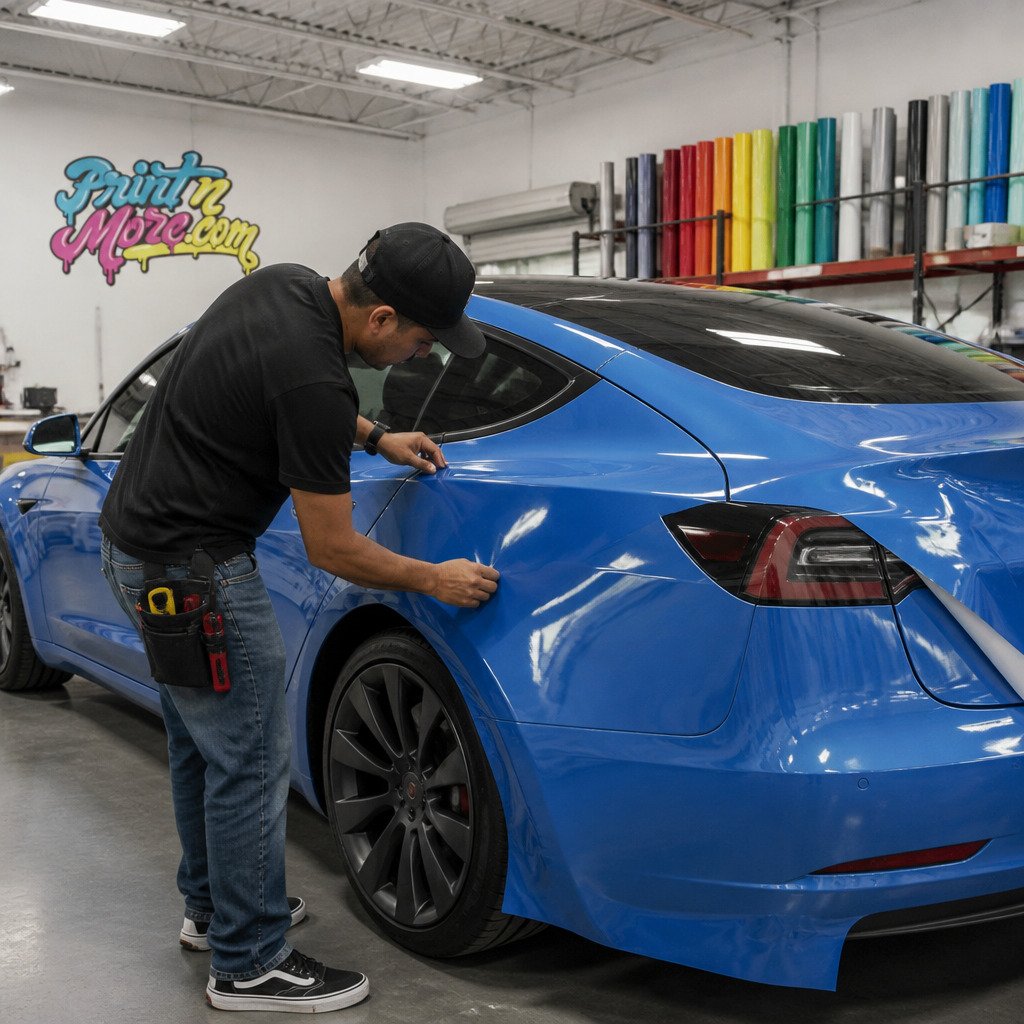
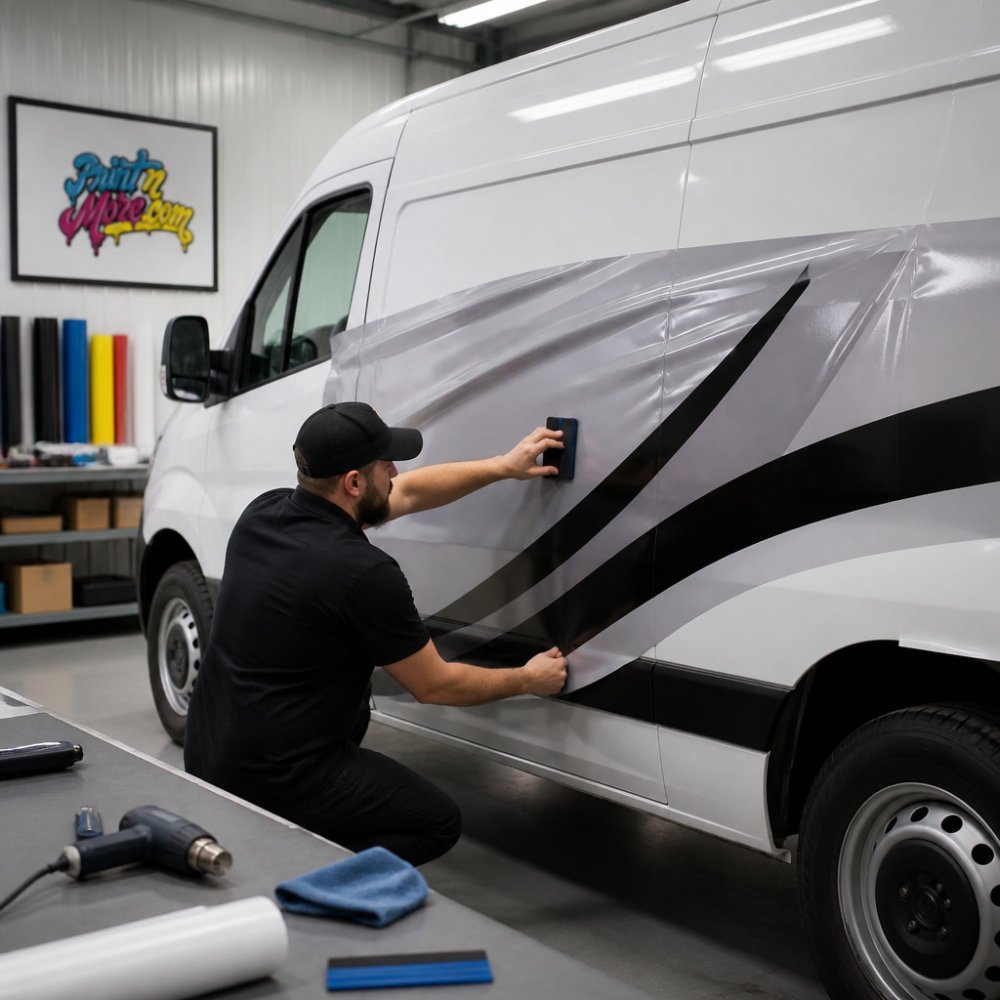
Shop work. Installation is where schedules most often slip, because it depends on bay availability and vehicle complexity. A flat-sided cargo van or box truck with simple contours can be completed in one to two shop days; a vehicle with deep curves, recessed handles, and complex bumpers can take three to five.
A turnaround checklist you can run before you order:
- Confirm the exact vehicle year, make, model, and trim, templates differ by trim and wheelbase.
- Send vector logo files (AI, EPS, or PDF) and confirm the printer's accepted formats and color mode.
- Approve the proof in writing, including phone number, web address, and color callouts.
- Reserve the installation bay and get the appointment confirmed in writing.
- Confirm the ship date, carrier, and tracking, and decide will-call versus delivery.
- Block a pickup window with at least two business days of slack before launch.
Lease and removal timing. If the vehicle is leased, plan the wrap around the lease term from day one. Cast vinyl removals are typically straightforward within the first few years, but removal adds shop time at the end of the term, usually a few hours to a day depending on coverage and film age. Ask your installer about removal cost and paint protection before you sign, and keep the removal appointment on the calendar alongside the original install.
Insurance and local rules.
The three stages that drive a wrap's schedule, with the typical time for each, as described above:
| Stage | Typical time | What speeds it up |
|---|---|---|
| Printing | 1-3 business days; 24-48 hours on rush lanes | Print-ready file passing preflight on the first pass |
| Shipping | 3-5 business days ground; 1-2 expedited | Will-call pickup from a local printer |
| Shop installation | 1-2 days for flat vans; 3-5 for curved vehicles | Booking the install bay when the print order is placed |
Small Business Vehicle Graphics That Get Built Fast
Simple graphics move faster than intricate ones. Large logos, bold colors, a clear phone number and a short web address make installation quicker and read well from the road. Avoid thin script and dense paragraphs. Fewer design elements mean fewer approval rounds and fewer chances for a mistake that forces a reprint.
Design-ready files also save days. Send vector logos and accurate vehicle templates when you order. If your designer works remotely, confirm early which file formats the printer accepts.
Vehicle Wrap Design Steps That Protect Your Timeline
Most wrap delays are not caused by the printer or the installer, they are caused by files and approvals that arrive incomplete. The single highest-leverage thing a small business can do to hit a 24-48 hour print turnaround is to send a print-ready file on the first pass.
Step 1: Lock the vehicle template. Templates are specific to year, make, model, trim, and wheelbase. A cargo van template is not the same as a passenger van template, and a high-roof model differs from a standard roof. Send your printer the VIN or the exact trim so they pull the correct template.
Step 2: Send vector, not raster. Logos should arrive as AI, EPS, or vector PDF. A JPEG or PNG logo pulled from a website will pixelate when scaled to vehicle size, and the printer will either reject it or ask for a redraw, both add days.
Step 3: Confirm color mode and bleed. Print files are typically supplied in CMYK, not RGB, and need bleed beyond the trim line so the installer can wrap edges cleanly.
Step 4: Approve the proof in writing. The proof is your last cheap chance to catch a wrong phone number, a missing apostrophe, or a color that reads poorly on a dark van. Approve in writing (email is fine) and keep the approval on file.
Step 5: Book the install before the film ships. The installation bay is the scarcest resource in the chain. Reserve it when you place the print order, and confirm the drop-off and pickup windows in writing.
DIY versus professional installation. For a small business weighing speed against cost, the trade-off is real. A full wrap on a cargo van involves heat-forming film around curves, trimming edges without cutting paint, and managing air release, mistakes that show up as lifting edges or bubbles within weeks. Partial wraps and spot graphics on flat panels are more forgiving and are the realistic DIY candidates. For a full wrap on a curved vehicle, professional installation is usually the faster and lower-risk path, because a failed DIY attempt costs both the film and the reprint time. Get a written quote for both before deciding.
A design-ready file checklist:
- Vector logo (AI, EPS, or vector PDF)
- Exact vehicle year, make, model, trim, and wheelbase
- CMYK color mode and printer-specified bleed
- Resolution at final size per the printer's spec
- Final copy proofread for phone, web address, and legal text
- Written proof approval on file
Running this checklist before you upload is the difference between a wrap that prints in a rush lane and one that sits in a reprint queue.
Plan Your Rush Wrap Order With PRINTnMORE
PRINTnMORE offers vehicle wraps alongside signage and printed materials. Customers have told us that changes are handled quickly and professionally.
Request a quote for your vehicle wrap through the contact page, and see how fast turnaround printing options and custom vehicle graphics ideas for small businesses can fit your campaign. Pricing depends on quantity, dates and delivery, so contact PRINTnMORE for a current quote.
Frequently Asked Questions
How quickly can a business vehicle wrap be designed and installed?
Timing depends on whether the artwork is ready. With approved print-ready files, printing can ship in one to two business days, and professional installation in the shop often takes one to five business days. Designing new artwork adds time before printing begins, so a business with a campaign deadline should send files or start the design process as early as possible. Ask for a written timeline that separates design, printing, and installation so you can see where a delay would occur.
What affects the turnaround time for a vehicle wrap?
The biggest factors are design readiness, vehicle size and condition, the amount of coverage, and shop schedule. Full wraps on large vans take longer to install than spot graphics or a partial wrap. Vehicles that need cleaning, paint repair, or removal of old graphics add time before the new vinyl can go on. Rush printing can shorten the production step, but installation still follows the shop's queue.
Can a vehicle wrap be installed in one day?
Simple jobs, such as a few spot graphics or a partial wrap on a small vehicle, can sometimes be completed in a day once the printed vinyl is on hand. A full wrap usually needs more time because the vehicle must be prepped, panels must be measured and applied carefully, and edges must be trimmed and inspected. Confirm the expected installation window with the shop before you schedule a campaign launch.
What information should I provide to get a vehicle wrap quote?
Provide the year, make, and model of each vehicle, the coverage you want (full wrap, partial wrap, or spot graphics), your brand files or logo, the quantity of vehicles, and your target completion date. Mention whether the vehicles are leased, since that affects removal planning. Accurate details help the shop give a quote based on your actual scope rather than an estimate that changes later.