 ultimate-guide
The Complete Guide to Professional Branded Marketing Materials
Last Updated: October 26, 2026
Quick Summary
Branded marketing materials create consistency across every channel, making your company instantly recognizable and building customer trust through repeated exposure to your logo, colors, and messaging. Professional branded marketing materials solve the problem of inconsistent touchpoints by ensuring every piece from business cards to vehicle wraps reinforces your brand identity.
- Define your target audience and distill your key message into one clear statement before designing any materials.
- A brand style guide documents logo usage, colors with hex codes, typography, imagery style, and tone of voice for consistency.
- Print files must be 300 DPI in CMYK color mode with quarter-inch bleeds and margins, saved as PDF with embedded fonts.
- Launch multiple pieces of branded marketing materials simultaneously for maximum impact and measurable results.
- PRINTnMORE has served corporations, schools, and sports teams across the tri-county area for over 28 years.
Table of Contents
- Why Professional Branded Marketing Materials Matter
- Understanding Your Target Audience and Key Message
- Building a Brand Style Guide for Marketing Materials
- Exploring Marketing Collateral Examples Across Channels
- Using Marketing Materials Templates to Simplify Design
- Preparing Print-Ready File Setup and Production Standards
- Launching Your Branded Materials Campaign
- Frequently Asked Questions
Why Professional Branded Marketing Materials Matter
Your brand is competing for attention in a crowded marketplace. Every touchpoint, from business cards to vehicle wraps to event signage, either reinforces your identity or undermines it. When your marketing materials lack cohesion, customers notice. They may question whether your business is organized, professional, or worth their trust.
Professional branded marketing materials solve this problem. They create consistency across every channel, making your company instantly recognizable. A prospect who sees your logo on a business card, then encounters it on your website, then spots it on a vehicle wrap, develops confidence in your brand. That repetition builds familiarity and trust far more effectively than sporadic, disconnected messaging.
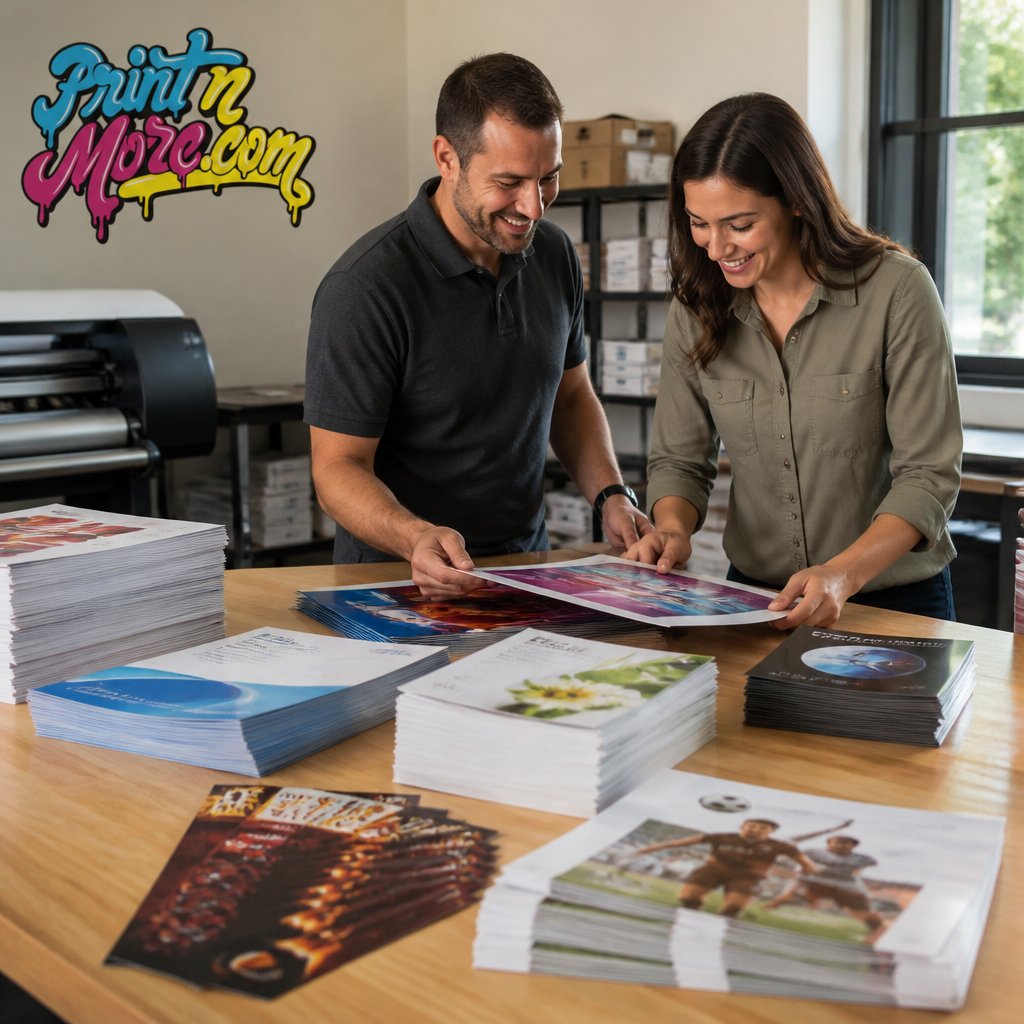
At PRINTnMORE, we've worked with corporations, schools, and sports teams across the tri-county area for over 28 years.
Understanding Your Target Audience and Key Message
Before you design anything, you must know exactly who you're speaking to and what you want them to do. Many teams skip this step and jump straight to aesthetics. That's a mistake.
Start by defining your target audience with specificity. Are you reaching corporate decision-makers, young families, or athletes? What are their pain points? What outcome are they seeking? Your branded marketing materials should speak directly to their needs, not broadcast generic corporate messaging.
Next, distill your key message into one clear statement. This is not your tagline, it's the core value you deliver.
Your value proposition answers the question: why should someone choose you over a competitor? Be specific. "High quality" is meaningless. "20% faster turnaround than the industry average" is concrete. Every element of your branded marketing materials, from copy to color choice to layout, should support this value proposition. When your audience encounters your materials, they should immediately understand what makes you different.
Building a Brand Style Guide for Marketing Materials
A brand style guide is your blueprint for consistency. It documents every decision about how your brand looks and sounds, so every piece of marketing collateral reflects the same identity.
Your brand style guide should cover these core elements:
Logo usage: Show how your logo appears in different sizes, orientations, and backgrounds. Specify clear space around the logo and minimum sizes for legibility. Define when to use color versions versus monochrome. Many businesses make the mistake of allowing their logo to be stretched, shrunk too small, or placed on backgrounds where it becomes illegible. Your guide prevents this.
Brand colors: List your primary and secondary colors with their exact specifications (hex codes for digital, Pantone numbers for print). Explain when to use each color and which combinations work together.
Typography: Specify which fonts to use for headlines, body text, and calls to action. Include font sizes and line spacing. Consistent typography makes your branded marketing materials feel intentional and professional. Mixing too many fonts creates visual chaos.
Imagery style: Describe the types of images that represent your brand. Are they photographs of real people or abstract illustrations? Bright and energetic or muted and professional? Consistent imagery style ties your materials together visually.
Tone of voice: Document how your brand communicates. Are you formal or conversational? Technical or accessible? Your branded marketing materials should sound like the same company, whether it's a business card or a brochure.
A brand style guide doesn't have to be elaborate. Even a one-page document that covers these fundamentals prevents inconsistency and saves time when you're designing new pieces.
Exploring Marketing Collateral Examples Across Channels
Different channels require different approaches. A business card serves a different purpose than a banner, and both differ from branded merchandise.

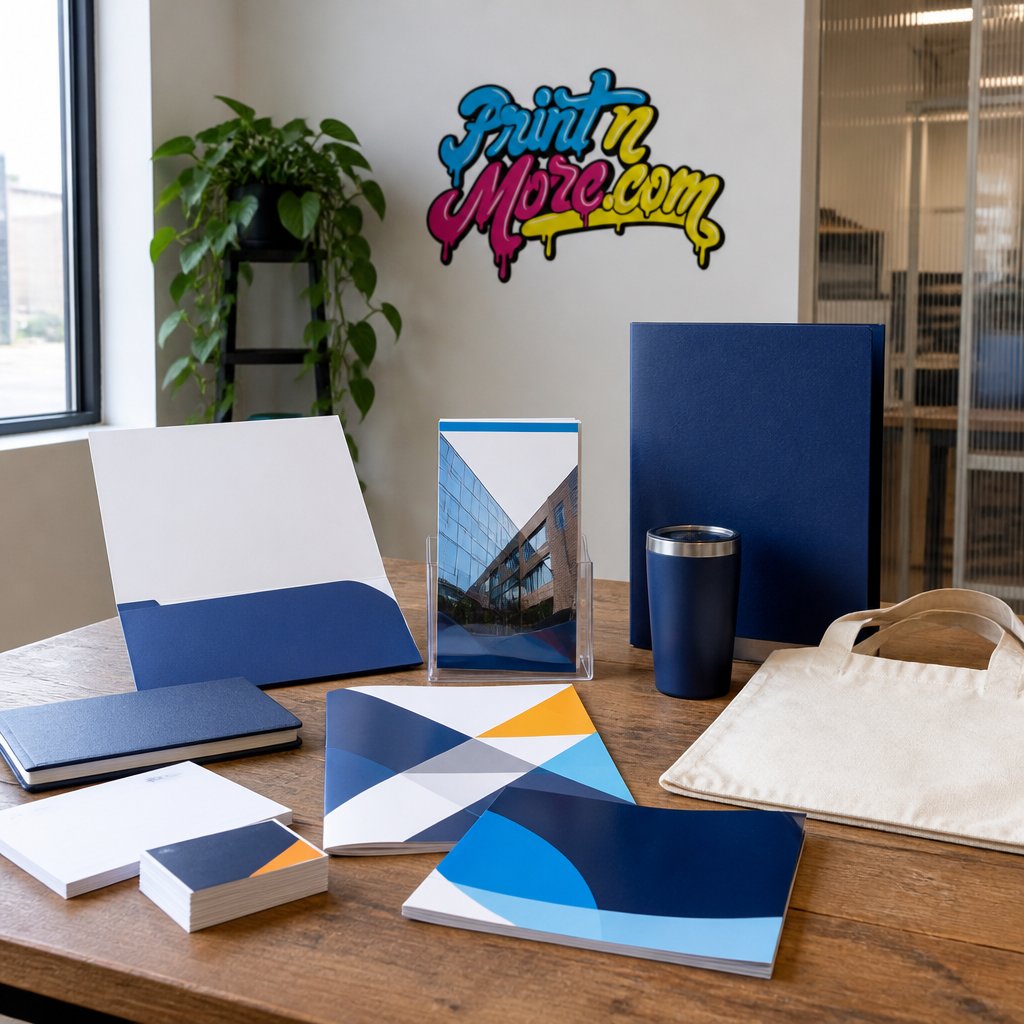
Business cards and printed collateral: These are often a prospect's first physical interaction with your brand. A well-designed business card signals professionalism.
Brochures and flyers: These pieces have more space to tell your story. Use a clear visual hierarchy so readers know where to look first. Lead with your key message, then support it with details.
Signage: Whether it's storefront signage or event banners, your sign must be readable from a distance. Use high contrast between text and background. Keep copy brief, a sign is not a place for lengthy explanations.
Vehicle wraps and outdoor advertising: These pieces reach people in transit, so they have seconds to make an impression.
Promotional products and branded merchandise: Items like branded t-shirts, mugs, or hats keep your brand in front of customers long-term. Ensure your logo and colors are accurately reproduced on whatever medium you choose.
Digital assets: Your branded marketing materials extend to email templates, social media graphics, and website headers. Use the same fonts, colors, and imagery style across digital channels.
Using Marketing Materials Templates to Simplify Design
Templates accelerate the design process and enforce consistency. Rather than starting from scratch for each piece, a well-built template ensures your branded marketing materials maintain the same structure, spacing, and visual hierarchy.
Templates work best when they're flexible enough to accommodate different messages but rigid enough to maintain brand standards. For example, a brochure template might include designated spaces for your logo, a headline area, body text sections, and a call-to-action footer.
Many businesses create templates for their most-used pieces: business cards, email signatures, social media posts, and one-page flyers. This approach saves time and reduces the risk of someone accidentally using the wrong fonts or colors.
Templates also make it easier to hand off work to team members or freelancers. Instead of providing lengthy design briefs, you can share a template that embodies your brand guidelines. This reduces back-and-forth revisions and ensures the final product aligns with your brand identity.
Consider using design tools that offer template libraries. Many platforms provide customizable templates that you can adapt to your brand colors, fonts, and messaging.
Preparing Print-Ready File Setup and Production Standards
The gap between a beautiful design and a poorly printed piece often comes down to file preparation. Understanding print production specifications ensures your branded marketing materials look exactly as intended when they come off the press.
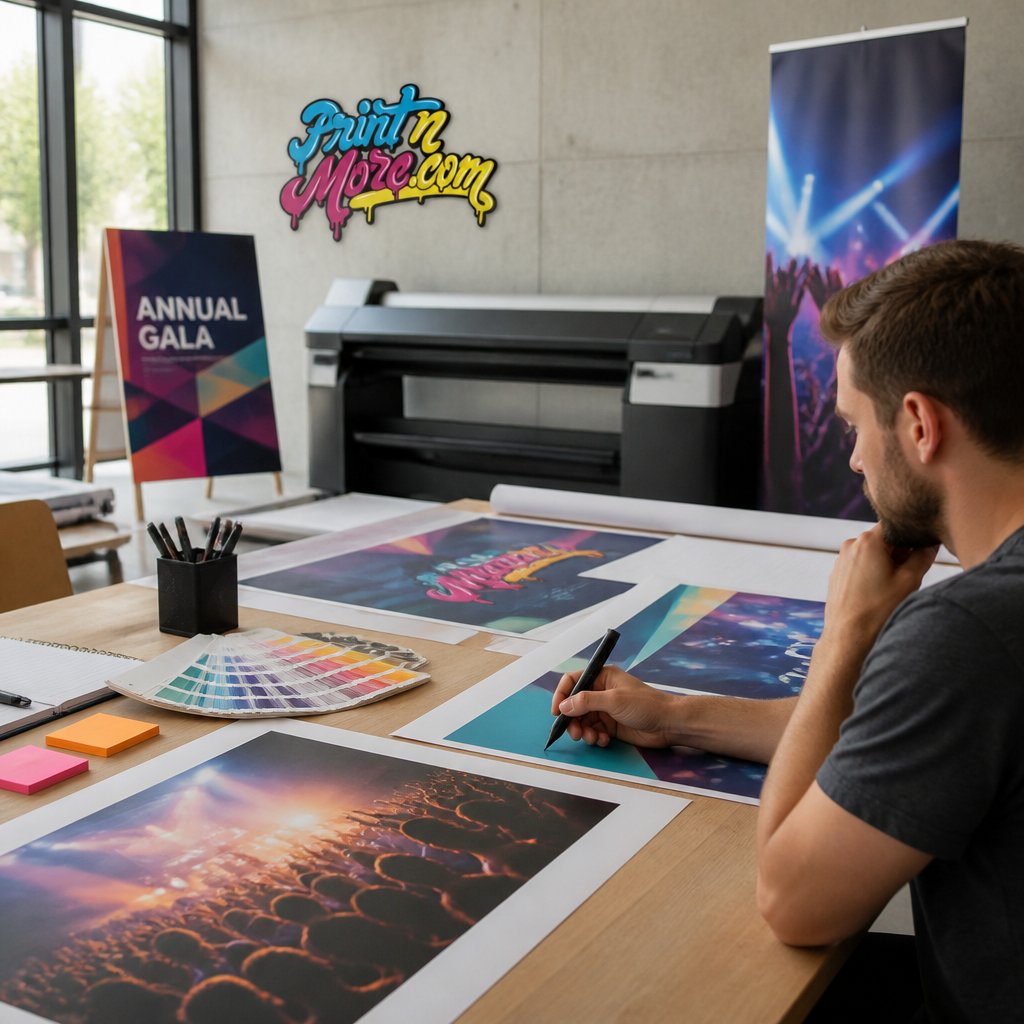
Resolution and color mode: Digital files for print should be 300 DPI (dots per inch) at final size. Lower resolution results in blurry, pixelated output. Use CMYK color mode for print, not RGB.
Bleeds and margins: A bleed is the area of your design that extends beyond the final trim line. Most print jobs require a quarter-inch bleed on all sides to ensure colors go to the edge without white borders.
File format: Provide files in PDF format, which preserves all formatting, fonts, and colors. Avoid sending JPEGs or PNGs, which can degrade quality and cause color shifts. PDF is the industry standard for print-ready files.
Font embedding: If you use custom fonts, embed them in your PDF so the printer has access to the exact typeface you designed with. Missing fonts force the printer to substitute alternatives, which can ruin your design.
Proofing before production: Always request a proof before your full print run. This is your chance to catch color issues, typos, or layout problems before thousands of pieces are produced. Offset printing vs digital for corporate branding affects how you prepare files, offset requires different specifications than digital printing.
Quality control matters throughout production. Ask your printer about their process for checking color accuracy and alignment.
Launching Your Branded Materials Campaign
Once your branded marketing materials are ready, the real work begins: getting them into the hands of the right people at the right time.
Start by identifying where your target audience will encounter these materials. If you're reaching corporate clients, business cards and brochures at trade shows make sense.
Timing matters. Launch multiple pieces of branded marketing materials simultaneously for maximum impact.
Track the performance of your branded marketing materials where possible. If you're using QR codes or unique URLs on different pieces, you can measure which materials drive the most engagement. This data helps you refine future campaigns.
Don't treat your branded marketing materials as a one-time project. Refresh them periodically, not so often that you lose brand recognition, but regularly enough to stay current. If your logo or colors change, update all materials consistently.
Professional printing services with fast turnaround ensure your campaign launches on schedule. Contact us to discuss your branded materials project. We'll help you choose the right formats, prepare files to specification, and deliver quality results on your timeline.
| Material Type | Best For | Key Design Focus |
|---|---|---|
| Business Cards | First impressions, networking | Clean layout, legible contact info |
| Brochures | Detailed storytelling | Visual hierarchy, clear sections |
| Signage | High-visibility awareness | Readability from distance, bold design |
| Vehicle Wraps | Mobile advertising | Logo prominence, brand colors |
| Promotional Products | Long-term brand presence | Logo accuracy, quality reproduction |
| Email Templates | Digital consistency | Brand fonts, colors, spacing |
Professional branded marketing materials are how you tell your story consistently across every channel.
Frequently Asked Questions
What makes marketing materials look professional?
Professional branded marketing materials combine consistent visual identity (logo, colors, fonts), clear visual hierarchy that guides the reader's eye, and concise, persuasive messaging. Quality paper stock, proper spacing, and error-free content reinforce credibility. Materials should reflect your brand guidelines and target audience expectations. When every element, from typography to imagery, aligns with your brand identity, materials immediately signal competence and trustworthiness.
How do you keep marketing materials consistent with your brand?
Create and maintain a comprehensive brand style guide that documents your logo usage, approved color palette, typography standards, imagery guidelines, and tone of voice. Apply this guide across all branded marketing materials, business cards, brochures, signage, apparel, and digital assets. Use approved templates and design systems to ensure uniformity. Regular audits of new materials against your guidelines prevent drift. Consistency builds brand recognition and strengthens customer trust over time.
What should be included in a brand style guide for marketing materials?
A brand style guide should specify logo placement and minimum sizes, approved brand colors with hex and CMYK values, primary and secondary fonts with usage rules, imagery style and photography guidelines, acceptable layouts and spacing, tone of voice guidelines, examples of correct and incorrect applications, and any legal or compliance requirements. Include guidelines for different material types, print, digital, apparel, signage, so teams know how to adapt your brand consistently across channels. Distribute this guide to all designers and vendors involved in creating your materials.
How do you prepare marketing materials for professional printing?
Work with your printer to confirm file specifications before submitting.
What is the difference between digital and offset printing for branded materials?
Digital printing works best for short runs and variable data (personalized names, addresses), offers fast turnaround, and requires no setup plates. Offset printing excels for large volumes, delivers superior color consistency and vibrancy, and offers lower per-unit costs at scale. For branded materials, offset printing typically produces richer colors and sharper detail, making it ideal for high-impact collateral like brochures and signage. Digital suits quick-turnaround promotional items or small-batch testing. Your printer can recommend the best method based on your quantity, budget, and timeline.
What are the key steps to create a cohesive marketing campaign?
Start by defining your campaign goal (lead generation, brand awareness, sales conversion) and target audience. Develop a clear value proposition and call to action. Design branded materials that reflect your brand identity and message hierarchy. Select the right channels and material formats (print, signage, promotional products) to reach your audience. Ensure all materials display consistent branding, colors, fonts, and messaging. Test materials for readability and impact before full production. Track campaign performance to measure results and inform future material design.
How do marketing materials templates save time and maintain consistency?
Templates pre-establish layout, spacing, font sizes, color placement, and logo positioning so designers start with a proven structure rather than building from scratch. This speeds up design cycles and ensures every piece follows brand guidelines automatically. Templates reduce errors, lower design costs, and allow non-designers to create on-brand materials. Maintain a library of templates for each material type, business cards, flyers, brochures, email headers, social graphics, and update them whenever brand guidelines change. Reusable templates make it easy to produce high volumes of branded collateral quickly.