 blog
blog
Professional Printing Services With Fast Turnaround
Table of Contents
- What Professional Printing Services With Fast Turnaround Actually Deliver
- Same-Day Printing Services: What's Realistic and What Isn't
- Printing Turnaround Time: Standard vs. Rush vs. Emergency
- Rush Printing Cost: What You'll Pay for Speed
- Fast Flyer Printing and Other High-Volume Materials
- How to Get Print-Ready Files Approved and Delivered on Time
- Choosing a Professional Printing Provider for Your Timeline
- Frequently Asked Questions
Last Updated: October 18, 2026
What Professional Printing Services With Fast Turnaround Actually Deliver
Professional printing services with fast turnaround combine speed and quality, but "fast" depends on your deadline, volume, and budget, from same-day printing for simple jobs to rush services compressing multi-day timelines into 24-48 hours.
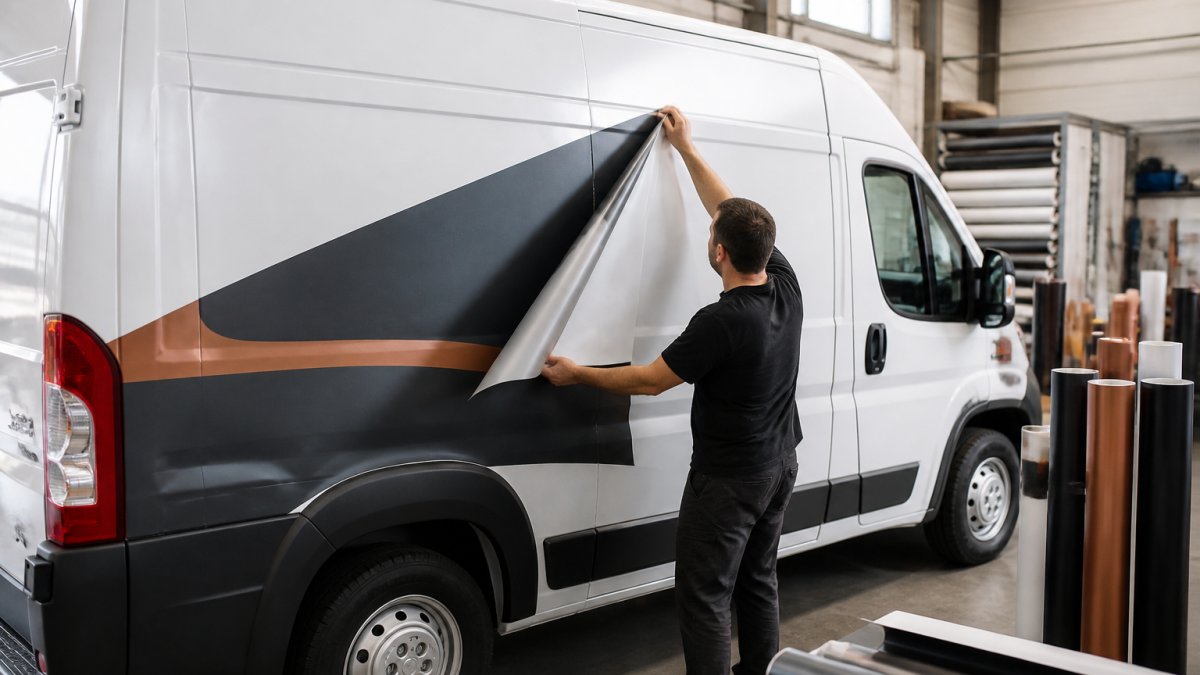
Same-day works for business cards, flyers, and single-color prints. A custom vehicle wrap or 500 branded t-shirts needs prep time, color approval, or finishing that can't be rushed.
What matters: knowing which jobs can be expedited, which providers deliver, and how to structure your order so nothing derails your timeline.
Same-Day Printing Services: What's Realistic and What Isn't
Same-day printing exists, but it's narrower than you think. Basic items, business cards, standard flyers, simple postcards, basic copies, turn around in hours because they need minimal setup and no complex finishing.
What doesn't work same-day: custom color matching, specialty materials, binding, embossing, or design revisions.
The catch is the cutoff time. Same-day typically means orders placed by 10 a.m. or noon.
Same-day works best when designs and specs are already approved. If you're still making changes, build in buffer time for file review, color proofs, and revisions.
Printing Turnaround Time: Standard vs. Rush vs. Emergency
Turnaround time breaks into three tiers, each priced differently.
Standard turnaround runs 5-7 business days. Jobs get batched, schedules optimized, and pricing is most competitive, the sweet spot when your deadline isn't urgent.
Rush printing compresses that to 2-3 business days with priority queueing, faster setup, and expedited finishing, usually adding 25-50% to standard pricing.
Emergency or expedited service targets 24 hours or less, this is where professional printing services with fast turnaround earn their reputation.
Not all jobs qualify for all tiers.
Rush Printing Cost: What You'll Pay for Speed
Speed costs money, but the number on your quote is built from specific levers, once you know them, you can predict and reduce the premium before you submit.
The five levers that set your rush premium:
- Turnaround tier. Pricing is tiered by compression: modest for a 3-day rush, larger for 2-day, steepest for 24-hour or same-day.
- Quantity and run length. Rush fees combine a fixed component (setup, queue-jumping, dedicated press time) with a per-unit component.
- Stock and substrate. House stocks (80 lb text, 100 lb cover, common 14-16 pt card stocks) rush cheapest because they're already on the floor. Specialty stocks, synthetics, and textured papers add lead time no rush fee can erase.
- Finishing steps. Each operation, cutting, folding, binding, laminating, scoring, drilling, foil, emboss, is a sequential step with its own setup, so three steps means three chances to queue. In-house finishing beats outsourced because it removes a handoff and a truck ride.
- Proofing method. A digital PDF proof is fast and cheap; a hard-copy or color-matched contract proof adds a day or more and a fee, but it's right for brand colors, packaging, or anything where a reprint would be catastrophic.
How the premium is structured. Most shops build the rush charge as base production cost plus a queue-priority or setup fee, plus overtime or dedicated-press charges, plus finishing expedite.
The total landed cost trap. The cheapest base price is meaningless if rush, proof, delivery, and file-correction fees are added later.
How to shrink the premium without missing the deadline:
- Move the deadline, not the job. Shifting from a 24-hour to a 3-day rush usually drops the premium sharply. Ask what the next tier down costs.
- Standardize the spec. House stock, standard size, one or two finishing steps, digital proof, every deviation adds time and money.
- Submit a clean file the first time. A file that passes preflight on arrival avoids the correction loop that resets your clock and can push you into a higher tier.
Fast Flyer Printing and Other High-Volume Materials
Fast flyer printing is one of the few areas where "fast" and "affordable" coexist. Flyers are simple, single or double-sided, standard sizes, minimal finishing, and a provider can turn around 1,000-5,000 in 1-2 business days.
Other high-volume materials that rush well: postcards, brochures (without binding), business cards, letterhead, envelopes.
What doesn't rush well: custom finishing.
Volume matters too. A 500-flyer order can often be expedited more aggressively than a 5,000-flyer order because smaller runs fit the schedule more flexibly.
How to Get Print-Ready Files Approved and Delivered on Time
This is where most projects derail. A print-ready file reviewed and approved by stakeholders is the difference between a smooth rush and a nightmare.

Get internal sign-off before submitting: stakeholder review, legal review if needed, and final approval from the decision owner.
Request a proof, digital or physical.
Communicate your deadline clearly, not just the delivery date, but when you need the job in hand and ready to use.
Choosing a Professional Printing Provider for Your Timeline
Most buyers pick a printer by whatever's closest or shows up first. For a deadline-driven job, that's backwards. The right provider depends on what you're printing, how many, when you need it, and how it has to arrive. Use this guide to narrow the field before requesting a quote.
Step 1: Match the provider to the job type
Different print jobs live in different production worlds, and a shop excellent at one can be mediocre at another.
- Simple, high-volume marketing (flyers, postcards, standard business cards, brochures without binding). These reward high-speed digital presses, house stocks on the floor, and automated preflight. Speed here is a workflow problem, not an equipment problem, look for published cutoff times and online ordering with fast quotes.
- Bound and finished documents (manuals, proposals, reports, training books). These reward in-house finishing, binding, trimming, tabbing, drilling. Outsourced binding adds a handoff and a day; ask whether binding happens under the same roof.
- Signage, banners, and large format. These reward wide-format equipment and in-house finishing (grommets, hemming, mounting). Installation is separate, confirm whether the provider installs or only produces.
Step 2: Match the provider to your deadline
Turnaround isn't a single number, it's a set of cutoff times by product. Before you commit, ask each provider three questions:
- What is the cutoff time for my product to hit my target tier? Same-day and next-day tiers usually have a hard cutoff (commonly late morning to early afternoon) that differs by product and finishing. Miss it and you roll to the next tier.
- Does rush work go into a dedicated queue or the standard queue? The single biggest differentiator, a shop with a dedicated rush line can compress timelines a shop without one cannot, even at the same advertised speed.
- What is the realistic in-hands date, not the ship date? They're different. If you need materials for a Saturday event, you need them in hand Friday, build in a buffer for carrier delays and last-minute issues.
Step 3: Match the provider to your delivery needs
Delivery is where fast production goes to die. Confirm in writing how the job will arrive: pickup, local courier, or parcel carrier. Pickup and local courier are fastest and most controllable; parcel carrier adds transit time you can't compress. For multiple locations, ask about split-shipping and whether it changes the timeline. For anything time-critical, pickup or local delivery is safest.
Step 4: Vet the provider with specific questions
A short, pointed question set separates reliable shops from ones that overpromise:
- Do you have a dedicated rush line, or does rush work share the standard queue?
- Which finishing steps are in-house, and which are outsourced?
- What is your current production capacity, and how full is the rush queue this week?
Evasive answers are a red flag. A provider that can't name its cutoff time or say whether finishing is in-house can't reliably hit a deadline.
Step 5: Compare on total landed cost and risk, not headline price
Once you've narrowed to two or three providers that can do the job on your timeline, compare the all-in number: production + rush + proofing + finishing + delivery, with tax and shipping separate. Then weigh risk. A slightly higher quote from a shop with in-house finishing, a dedicated rush line, and a clear reprint policy is usually a safer bet once you account for a missed deadline.
| Decision factor | What to confirm | Why it changes the outcome |
|---|---|---|
| Job type fit | Provider's core equipment and finishing match your product | Wrong-fit shops add handoffs and days |
| Cutoff time | Exact cutoff for your product and tier | Miss it and you roll to the next tier |
| Rush queue | Dedicated rush line vs. shared queue | Determines real compression, not advertised speed |
| Finishing | In-house vs. outsourced | Removes handoffs and transit time |
| Delivery | Pickup, courier, or parcel; in-hands date | Transit is the least compressible step |
| Proofing | Digital proof and press-check availability | Catches errors before they become reprints |
| Reprint policy | Written policy for proof mismatches | Protects you when something goes wrong |
| Total landed cost | Line-item quote on identical spec | Headline price hides rush and delivery fees |
Frequently Asked Questions
Can professional printing services complete same-day printing?
Yes, many professional printing services offer same-day printing for select products like business cards, flyers, and copies. However, same-day printing services depend on order complexity, file readiness, quantity, and when you place your order. Simple orders submitted before the cutoff time (often early afternoon) have the best chance of same-day completion. More complex jobs like custom signage or vehicle wraps typically require 2-5 business days even with rush options.
How long does printing turnaround time typically take?
Standard printing turnaround time ranges from 3-7 business days depending on the product and provider. Business cards and flyers often take 3-5 business days. Custom signage, vehicle wraps, and apparel may take 5-10 business days. Rush printing can compress timelines to 24 hours or less for simpler products. Always confirm the specific turnaround time with your provider before placing an order.
What files should I send to a printer for a rush order?
Send print-ready PDF files in CMYK color mode (not RGB), at 300 DPI resolution, with all fonts embedded and images high-resolution. Include 0.25-inch bleeds on all edges for full-bleed designs. Provide files in the exact dimensions your printer requires. Contact your printing provider before submitting to confirm file specifications and format preferences. Poor file quality delays rush orders, so getting specifications right the first time is critical for meeting tight deadlines.
Does rush printing affect print quality?
Professional printing services maintain quality standards even on rush orders when files are print-ready and specifications are clear. Quality issues arise from poor file preparation, not speed. Rushing a job with incorrect colors, low-resolution images, or wrong dimensions can result in reprints that waste time. Work with your printer beforehand to ensure files meet all technical requirements, and request a proof or sample before full production on high-stakes rush jobs.