 ultimate-guide
Fast Turnaround Custom Event Signage: A 2026 Guide
Table of Contents
- What Fast Turnaround Custom Event Signage Means
- Custom Event Banners: Design, Materials, and Lead Times
- Event Sign Design Fundamentals for Impact
- Next-Day Printing: What's Actually Possible
- Event Signage Materials: Indoor vs. Outdoor
- Timeline Planning: How Far in Advance to Order
- Quality Control on Tight Deadlines
- Frequently Asked Questions
Last Updated: October 14, 2026
What Fast Turnaround Custom Event Signage Means
Fast turnaround custom event signage refers to professionally designed and printed signs, banners, and displays produced on an expedited timeline to meet tight event deadlines.
Most events are planned with compressed timelines: a conference confirmed two weeks out, a product launch moved earlier, a school needing banners next month.
Three things make this possible: simplified file preparation, materials that don't require extended lead times, and a production facility that can prioritize your order.
Custom Event Banners: Design, Materials, and Lead Times
Custom event banners are the workhorse of fast-turnaround signage: visible, flexible in size, and quick to produce. A typical banner moves from approved design to finished product in 24 to 48 hours, depending on size, material, and pickup or shipping.
The key variables are material and design complexity. A simple two-color vinyl banner is faster than a photorealistic image on fabric, but the bottleneck isn't production, it's getting the artwork right.
Vinyl vs. Fabric: Choosing the Right Material
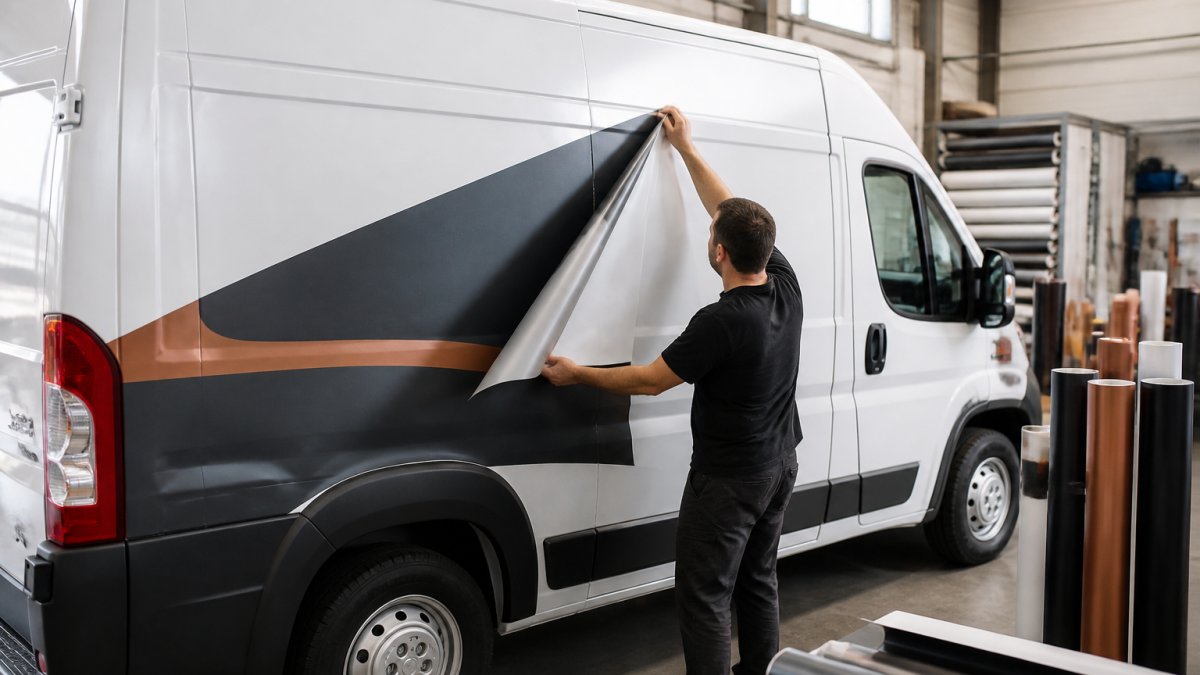
Vinyl banners are the fastest option for custom event signage.
Fabric banners take slightly longer, usually 36 to 48 hours, but offer a more premium look for indoor corporate events, product launches, and upscale venues.
The choice comes down to venue and timeline: vinyl wins on speed and durability for outdoor events, pop-up displays, and conventions; fabric gives a more polished look indoors.
Size and Placement Considerations
Banner size affects both production time and visual impact.
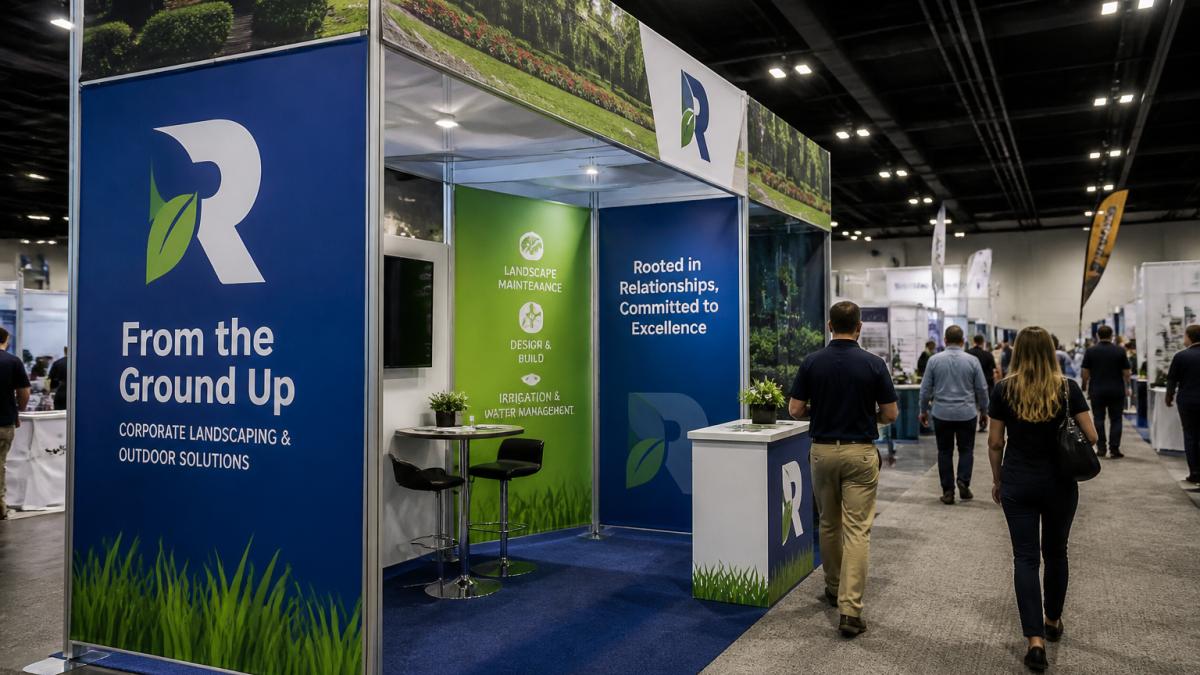
For trade shows and conventions, banners 8 to 10 feet wide are standard: large enough to draw attention across a booth floor without special installation equipment.
Placement matters for production too. An outdoor banner needs reinforced grommets and weatherproof materials; an indoor banner can use lighter materials and simpler hanging systems.
Event Sign Design Fundamentals for Impact
The design of your custom event signage determines whether people notice it from across a room or walk right past. Professional event sign design balances readability, brand consistency, and visual hierarchy.
Readability at a Distance
The most common mistake in event signage design is text that's too small.
The rule of thumb: for every 10 feet of viewing distance, you need at least 1 inch of letter height.
Sans-serif fonts (Helvetica, Arial, or modern alternatives) are more readable at distance than serif fonts, and bold weights beat light ones.
When ordering fast turnaround custom event signage, you don't have time to redesign after seeing a proof.
Color Accuracy and Brand Consistency
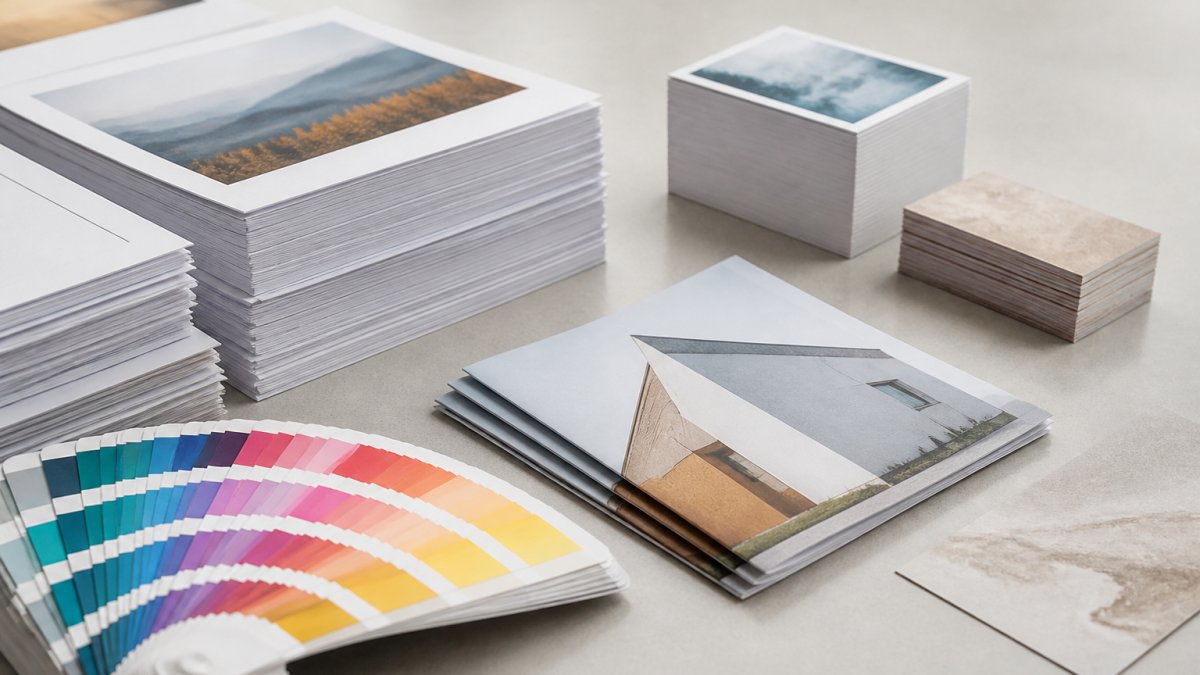
Colors look different on screen than in print: a blue that looks perfect on your monitor might print as purple or teal.
Use a color standard like Pantone or CMYK when you submit files. Specify brand colors using Pantone numbers, not RGB values: RGB is for screens, print uses CMYK, and careless RGB-to-CMYK conversion shifts colors.
PRINTnMORE uses color management systems that ensure consistency across runs.
Next-Day Printing: What's Actually Possible
Next-day printing for custom event signage is real, but it comes with conditions. Size, complexity, material choice, and file readiness all factor in, so understanding what's possible helps you set realistic expectations.
A simple vinyl banner up to 8 feet wide with a straightforward design and approved files can be printed and ready for pickup the next day.
File Preparation Checklist for Rush Orders
On a tight timeline, file quality becomes critical. A file that's fine for a standard order becomes a liability for next-day turnaround, when there's no time to troubleshoot or request corrections.
Here's what your files need before you submit for a rush order:
- Resolution: Minimum 300 DPI at final print size. This is non-negotiable for professional quality.
- Color mode: CMYK for print, not RGB. RGB files need conversion, which adds time and risk of color shifts.
- Format: PDF, AI, or native file format (Photoshop, Illustrator). Don't send JPEGs or PNGs for final production.
A file that meets these specs moves straight to production; one that doesn't gets held up while someone tracks down missing fonts, converts color modes, or requests a new version.
Common Mistakes That Delay Production
The most common delay in rush orders isn't production, it's preventable file issues. Avoid these:
Submitting RGB files instead of CMYK: the printer must convert them, colors shift, and a new proof and approval eat up your timeline.
Using non-standard fonts: if your designer's trendy font isn't on the production system, text substitutes to something generic and your design changes.
Requesting changes after proof approval: every change requires a new file, proof, and approval, which can push you past your deadline.
Waiting until the last minute to submit files: ordering Tuesday for Wednesday delivery leaves no margin, and any small issue becomes a problem.
Event Signage Materials: Indoor vs. Outdoor
The environment where your signage will live determines which materials work and how long they last. Indoor and outdoor signage have different requirements, and the wrong material can mean banners deteriorate, fade, or fail before your event is over.
Durability and Weather Resistance
Outdoor event signage must withstand sun, wind, and moisture. Vinyl is the standard choice because it's UV-resistant and water-resistant, maintaining color and integrity for months outdoors.
Indoor signage is more flexible. Fabric banners look premium and suit corporate events, conferences, and upscale venues; they don't need UV protection and won't show fingerprints or dust the way vinyl does.
Installation and Safety Requirements
How you install your signage affects both timeline and safety. Vinyl banners with grommets hang with rope or cable; fabric banners use sleeves or loops.
Most trade show and convention venues have specific installation requirements: some require professional installation, restrict what you can attach to walls or ceilings, or charge fees.
Wind matters for outdoor signage. A banner secured with reinforced grommets and heavy-duty hardware stays in place; a loosely hung one flaps, tears, and fails.
Timeline Planning: How Far in Advance to Order
The timeline for custom event signage depends on your deadline, design complexity, and whether you pick up locally or ship. Plan backward from your event date to avoid last-minute panic.
Standard Production Windows
Here's what typical timelines look like for custom event signage:
Two weeks or more: Time for design iterations, proofs, and changes. Any material, size, or format; standard, affordable shipping. Quality is never rushed.
One week: Professional custom event signage is still possible, but design changes must be minimal. Have a clear vision before submitting files.
Three to five days: The rush window. Finalize your design, with clean, approved files. Vinyl beats fabric and simple beats complex.
24 to 48 hours: Next-day or two-day printing. Files must be perfect and approved before submission.
Shipping and Pickup Deadlines
Shipping is where many rush orders fail: a banner that prints in 24 hours but takes 3 days to ship defeats the purpose.
PRINTnMORE offers free local pickup for customers in the tri-county area.
The shipping deadline is the real deadline, not the production deadline. If your event is Friday and you need signage Thursday morning, account for production plus shipping or pickup.
Quality Control on Tight Deadlines
Speed doesn't mean cutting corners. When you order fast turnaround custom event signage, you're trusting your printer to deliver professional results under pressure. Knowing the quality control process tells you what to expect and inspect.
Proofing and Approval Process
The proof is your insurance policy: a sample showing exactly how colors, text, and design will look in the final print.
When you order from PRINTnMORE, you get a digital proof within hours of submitting files.
Approval is where you catch problems before printing: Is the text the right size? Are the colors accurate? Is the layout balanced?
What to Inspect Before Your Event
When you pick up or receive your custom event signage, inspect it before leaving the printer or unpacking at your event. Check for:
- Color accuracy: Does it match your brand? Are there any unexpected color shifts?
- Text clarity: Is every word readable and sharp? Are there any blurry or distorted letters?
- Print quality: Are there any streaks, smudges, or uneven color coverage?
If you spot an issue, address it immediately: a small problem at pickup is fixable, but one discovered at your event is a disaster.
Planning a corporate event, trade show, or school function requires more than generic materials.
Fast turnaround doesn't mean compromising on quality or professionalism. PRINTnMORE has delivered professional custom signage, vinyl banners, and event graphics for over 28 years, and we understand tight timelines because we live them.
Whether you need large-format printing for a trade show display, custom banners for a corporate event, or directional signage for a convention, we handle it with the attention to detail that's made us a trusted partner for businesses, schools, and event planners across the tri-county area. Contact PRINTnMORE today to discuss your event signage needs and get a quote.
| Signage Type | Best Timeline | Material | Best For |
|---|---|---|---|
| Vinyl banners | 24-48 hours | Vinyl | Outdoor events, trade shows, quick turnaround |
| Fabric banners | 48-72 hours | Fabric | Indoor corporate events, premium look |
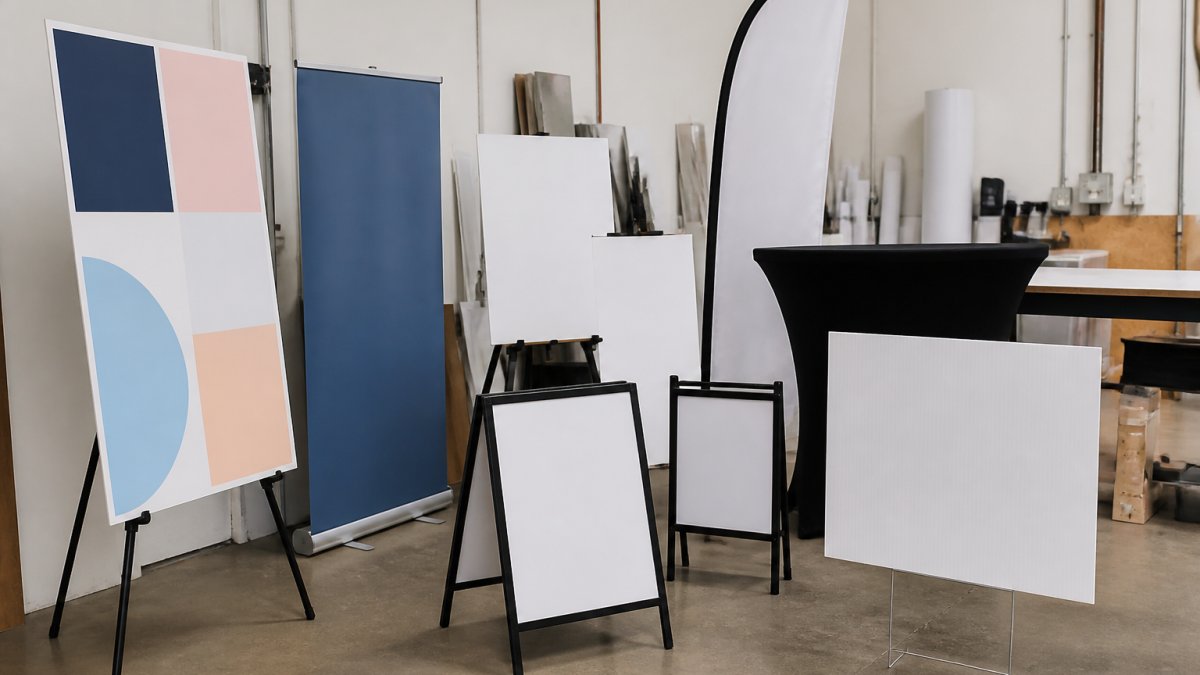
| Directional signage | 24-48 hours | Vinyl or foam | Wayfinding, event navigation |
| Pop-up displays | 3-5 days | Vinyl and frame | Conventions, portable events |
| Window graphics | 24-48 hours | Vinyl | Retail, venue branding |
EXTERNAL CITATIONS:
To understand best practices in event signage and custom printing standards, consult the Specialty Graphic Imaging Association guidelines for print quality, which sets industry standards for color accuracy and production specifications. For guidance on event planning timelines and logistics, the Professional Convention Management Association resources provides frameworks for coordinating event materials and deadlines. Additionally, the Advertising Specialty Institute standards for promotional products outlines best practices for custom branded materials used in corporate and event settings.
Frequently Asked Questions
How quickly can custom event signage actually be made?
Production timelines for fast turnaround custom event signage depend on complexity, quantity, and material choice. Simple vinyl banners can be produced within 24 hours if files are print-ready; more complex designs with multiple colors or custom graphics typically need 2-3 business days. Next-day printing is possible for rush orders when artwork is approved and files meet technical specifications. Always confirm deadlines with your printer before ordering, especially for events less than a week away.
What file format should I use for custom event signs?
Event sign design files should be submitted as PDF, AI (Adobe Illustrator), or EPS formats for best results. Ensure files are in CMYK color mode (not RGB), with all fonts embedded or converted to outlines. Include a 0.25-inch bleed margin around the design, and confirm final dimensions match your sign size exactly. Providing high-resolution files (300 dpi minimum) prevents quality loss on large-format printing. If you're unsure about file preparation, ask your printer for a technical checklist before finalizing artwork.
What materials work best for indoor versus outdoor event signage?
For indoor events, foam board, paper, or lightweight vinyl work well and are cost-effective. Outdoor event signage materials must resist weather: vinyl banners, corrugated plastic, and aluminum composite are durable choices that withstand wind, moisture, and UV exposure. Vinyl is flexible and portable; rigid materials like aluminum are heavier but more stable in high-wind conditions. Consider your venue's setup time and breakdown logistics when selecting material, portable options reduce labor and shipping costs.
How far in advance should I order custom event banners?
Standard lead time for custom event banners is 5-7 business days from artwork approval. If your event is within 2 weeks, request rush production availability immediately. For events less than 5 days away, confirm next-day printing options and arrange local pickup to avoid shipping delays. Always build in 1-2 extra days as a buffer for unexpected revisions or approvals. Ordering early also reduces rush fees and gives your printer flexibility to ensure quality.
What should I include on event signage to make it readable from a distance?
Use bold, sans-serif fonts (Helvetica, Arial, or similar) with high contrast between text and background. Maintain a minimum font size of 2 inches for text readable from 10 feet away; increase size for larger viewing distances. Limit text to essential information: event name, date, time, and location. Avoid cluttering signage with too many colors or graphics. Test readability by viewing mockups from the distance your audience will stand, this catches legibility issues before production.
What common mistakes delay custom event signage production?
The most frequent delays occur when files aren't print-ready: incorrect color mode (RGB instead of CMYK), missing fonts, low resolution, or unclear dimensions. Approving designs late or requesting multiple revisions after production starts also adds days. Providing incomplete information (missing event details, vague sizing) forces back-and-forth communication. Prevent delays by preparing a file checklist, confirming all details upfront, and approving proofs within 24 hours. Communicate your hard deadline clearly so your printer can prioritize accordingly.
How do I ensure color accuracy on custom event signage?
Provide a color reference (Pantone number, brand guidelines, or sample) so the printer matches your expectations. Understand that screen colors differ from printed output, what you see on your monitor may not match the final banner. Professional printers use color management systems to maintain consistency, but lighting conditions at your event venue also affect how colors appear. Review approved proofs carefully and communicate any color concerns immediately.