 Ultimate guide
Choosing Durable Materials for Outdoor Signage Guide
Quick Summary
The most durable outdoor signage materials are aluminum and aluminum composite panels, which resist rust and handle weather well. Lifespan also depends on the coating, laminate, edge seal and fasteners, not just the base substrate. Match the material to your site's exposure, such as coastal salt air, heat, or high wind.
- Aluminum composite and solid aluminum are rated high for rust resistance and UV stability.
- Unprotected PVC can yellow, warp or become brittle in direct sun.
- Coroplast suits temporary signs and lasts months to 2 years.
- Seal composite panel edges to keep moisture out of the core.
- Compare annualized cost over expected service life rather than the sticker price.
Table of Contents
- What Makes an Outdoor Sign Material Durable?
- Comparing Outdoor Sign Materials Side by Side
- Aluminum and Aluminum Composite Panels
- PVC Sign Board Material: Strengths and Limits
- Acrylic, Polycarbonate, Vinyl and Other Options
- Weatherproof Outdoor Sign Material for Harsh Climates
- Lifespan, Maintenance and Total Cost of Ownership
- Installing Durable Business Signs That Last
- Frequently Asked Questions
What Makes an Outdoor Sign Material Durable?
Last Updated: November 24, 2026
Outdoor signage is judged by how well it survives sun, rain, wind and time, and the material you pick determines most of that outcome. The same question comes up in nearly every quote: which substrate will still look sharp in five years? Durability depends on resistance to weather, UV exposure, moisture, impact and wind loading, and no single material wins on all five.
Weather, UV and moisture resistance
Outdoor sign material is durable when it holds color, shape and surface integrity under sustained exposure. Lifespan depends on the coating, the finish and the installation environment, not just the base metal.
Moisture is the silent failure mode. Metals that rust need a protective finish, while rigid plastics can absorb heat and warp. A material rated for UV resistance will still fade if the ink or laminate above it is not rated for the same exposure, so check the full stack, not just the substrate.
Impact and wind resistance
Wind loading and accidental impact matter most for large, freestanding or projecting signs. Rigidity and thickness are the main levers here: a thicker panel resists flexing that cracks paint and loosens fasteners over time. Lightweight materials reduce structural load but can oil-can or flutter in strong gusts if they are not properly framed.
Comparing Outdoor Sign Materials Side by Side
The table below summarizes typical durability characteristics across common outdoor substrates. Ratings are relative guidance, not lab-tested scores, so confirm specifications with your fabricator.
| Material | Typical Lifespan | Rust Resistance | UV Stability | Relative Cost | Best For |
|---|---|---|---|---|---|
| Aluminum composite (ACM) | 10+ years | High | High | Moderate | Permanent exterior signs |
| Solid aluminum | 10+ years | High | High | Moderate to high | Structural or high-wind sites |
| Powder-coated steel | 7-10 years (coating intact) | Medium, coating-dependent | Medium | Moderate | Heavy-duty mounts |
| PVC (foamed) | 5-7 years | High | Medium | Low | Budget permanent signs |
| Coroplast (corrugated plastic) | Months to 2 years | High | Low | Very low | Temporary and event signs |
Matching material to climate and exposure
A material that performs well in one environment can fail early in another, so the selection decision should start with the exposure profile of the installation site rather than with the substrate alone. The matrix below translates common conditions into practical starting points.
| Exposure condition | Primary risk | Recommended starting point | Avoid or limit |
|---|---|---|---|
| Coastal salt air and high humidity | Corrosion of fasteners and steel; moisture intrusion at edges | Solid aluminum or ACM with sealed edges and stainless fasteners | Untreated steel; unsealed composite cores |
| Freeze-thaw cycles | Water infiltration, cracking at seams, fastener loosening | ACM or solid aluminum with flexible sealant at joints | Rigid PVC in unsheltered freeze-thaw exposure |
| Extreme heat and high UV | Fading, chalking, warping, brittleness | UV-stabilized acrylic or polycarbonate; aluminum with UV-rated laminate | Unlaminated digital print; unprotected PVC |
| Heavy rain and driving moisture | Water tracking behind panels, mold, delamination | Sealed-edge ACM; powder-coated aluminum | Wood without continuous sealing |
| High wind and large freestanding signs | Flexing, oil-canning, fastener fatigue | Solid aluminum or reinforced ACM with engineered framing | Thin corrugated plastic; unframed lightweight panels |
The coating, laminate, edge seal, and fastener package all affect how long a sign lasts, not just the substrate.
Choosing by sign type and application
The same material logic changes with the sign's job. Permanent monument and building signs justify aluminum or ACM because the installation cost is high and replacement is disruptive. Illuminated cabinet signs typically use acrylic faces for light transmission, with polycarbonate where impact resistance matters more than clarity. Temporary event and real estate signs favor corrugated plastic because the low unit cost outweighs a short lifespan. Directional and wayfinding signs in high-touch areas benefit from polycarbonate or aluminum because impact and cleaning are frequent. Wood remains a niche choice for a specific aesthetic, but it should be sealed on all faces and re-coated on a schedule rather than treated as a low-maintenance option.
Aluminum and Aluminum Composite Panels
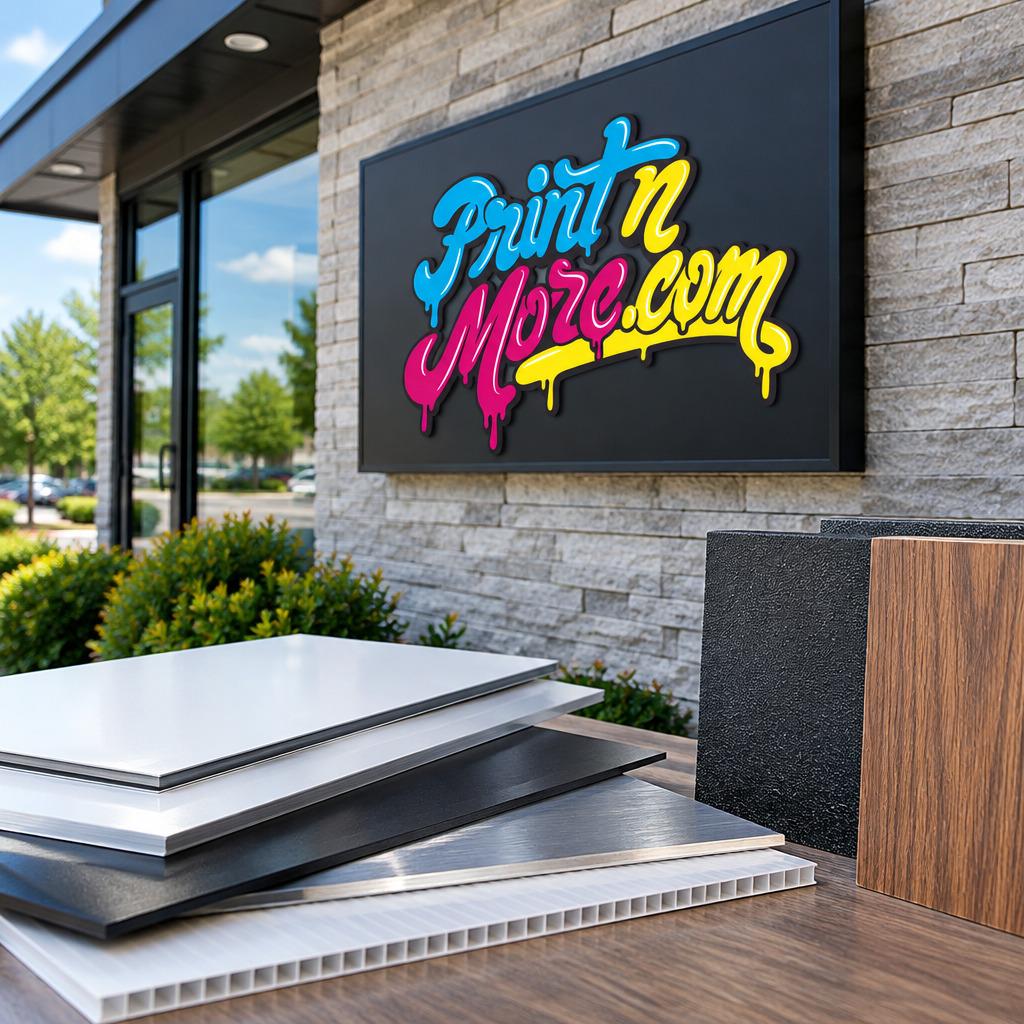
Aluminum is the most common recommendation for permanent outdoor signage because it does not rust and handles weather well. Aluminum composite panels, which bond two thin aluminum skins to a plastic core, are a popular choice for business signs. Triton Design (2026) notes that aluminum composites and acrylic remain among the most popular options for business signs.
The trade-off is cost and weight relative to plastic. Composite panels are easier to fabricate and lighter than solid aluminum, but the edges need sealing to keep moisture out of the core. Ask your printer whether the panel is painted or printed directly, because direct-print inks need a UV-resistant laminate to avoid fading.
PVC Sign Board Material: Strengths and Limits
PVC sign board material is often considered a budget-friendly option for indoor and sheltered outdoor uses.
Its main limit is UV and heat exposure. Unprotected PVC can yellow, warp or become brittle in direct Florida sun, so pair it with a UV-protective laminate and avoid mounting it where it will sit in heat for long periods. Treat PVC as a strong value option for sheltered or moderate-exposure locations, not for the harshest sun.
Acrylic, Polycarbonate, Vinyl and Other Options
Acrylic offers excellent clarity and a glossy finish for illuminated and indoor-facing signs. Polycarbonate is far more impact-resistant but needs UV-stabilized grades for outdoor use. Vinyl graphics are rarely a standalone sign; they are applied to a rigid substrate and rated by their own film life.
Other options include wood, which looks distinctive but requires regular sealing, and foam or corrugated plastic, which suits temporary signage. The strongest choice depends on how long the sign must last and how it will be seen.
Weatherproof Outdoor Sign Material for Harsh Climates
Humid, salty and sunny coastal climates are demanding on outdoor signs.
For coastal and high-humidity sites, aluminum-based substrates and UV-stabilized laminates are commonly chosen for long-term outdoor use. Custom signage systems built for Miami's humidity and sun show how these materials are applied from lobby pieces to exterior signs.
Lifespan, Maintenance and Total Cost of Ownership
The cheapest sign is not always the least expensive over time. Comparing offset and digital printing can help you weigh long-term cost against print method before you commit. A low-cost material that fades or warps in three years can cost more than a durable option that lasts a decade, once you factor in replacement, installation labor and downtime. The useful way to compare materials is to add up five cost buckets over a realistic service life rather than comparing the quote on the panel alone.
The five cost buckets
- Purchase and fabrication. The substrate, print or coating, cutting, and any finishing. This is the number most quotes lead with, and it is usually the smallest share of lifecycle cost for a permanent sign.
- Installation and mounting. Labor, equipment, framing, fasteners, and any structural work. Installation cost is often similar across substrates, which means a cheaper panel saves less than buyers expect on a fully installed project.
- Maintenance. Washing, inspecting fasteners and seals, and re-coating or re-sealing. Wood and steel demand more of this than aluminum or ACM; unprotected PVC demands more than UV-stabilized acrylic.
- Repair. Replacing a faded face, re-laminating a print, or patching impact damage. Repairability varies widely: a vinyl graphic on a sound aluminum panel can be replaced without replacing the substrate, while a warped PVC panel usually cannot be salvaged.
- Replacement and downtime. The full cost of removing and re-making the sign, plus the lost visibility while it is down. For a storefront, downtime can outweigh the material cost difference between a budget and a durable option.
A simple way to compare two options
A practical comparison is to divide the total of all five buckets by the expected service life in years to get an annualized cost, then compare that figure rather than the sticker price. A low-cost panel with a three-year life and a mid-cost panel with a ten-year life can land close together on annualized cost, and the longer-life option usually wins once downtime and installation labor are counted. Because actual figures depend on sign size, quantity, finish, and installation conditions, the only reliable comparison is an itemized quote for your specific project.
Watch out: quotes that bundle setup, art, and installation into one line make it impossible to compare annualized cost across materials, so ask for the buckets broken out before approving an order. Tips for spotting hidden printing setup fees explain how to find these charges in a quote.
Maintenance that protects the investment
Maintenance is simple but important: wash surfaces periodically with mild detergent, check fasteners and seals at least annually, and replace graphics before they chalk or crack. In coastal or high-UV locations, shorten the inspection interval and pay particular attention to cut edges and mounting points, which are where moisture and corrosion usually start. Keeping a written record of the substrate, coating, and laminate used makes it easier to match replacements later and to spot the point in the service life where re-finishing is cheaper than replacement.
Pricing depends on size, material, finish, quantity and installation requirements, so request a written quote from PRINTnMORE to compare total cost on your specific project.
Installing Durable Business Signs That Last
Material choice only pays off with correct installation. Use stainless or galvanized fasteners compatible with your substrate, allow for thermal expansion in larger panels, and seal any cut edges. Mounting method matters as much as the panel itself, especially for projecting or high-wind installations. Professional sign design, manufacturing and installation can help you plan the mounting for your site.
PRINTnMORE can help plan the material, finish and mounting together from the start. Contact our team for a quote tailored to your location and exposure conditions.
Frequently Asked Questions
What is the most durable material for an outdoor sign?
Aluminum is generally considered one of the most durable options for outdoor signs. It is rust-free and, according to a 2026 material guide from Real Cool Signs, can last 10 years or more. Powder-coated steel can last 7 to 10 years if its coating stays intact, and PVC typically lasts 5 to 7 years. Lifespan depends on the exact material, thickness, finish and how the sign is installed and exposed to sun and weather, so treat these figures as estimates rather than guarantees.
Which outdoor sign materials hold up best in sun and rain?
Materials with strong UV resistance and moisture resistance hold up best. Aluminum composite panels and acrylic are among the most popular choices for business signs, in general industry practice. Look for UV-stable inks and laminates, since the print finish often fades before the substrate fails.
Is aluminum or PVC better for outdoor signs?
Aluminum usually outlasts PVC outdoors and is more rigid, which makes it a better fit for permanent signs that face wind. PVC is lighter and less expensive, so it works well for short-term or indoor-adjacent signage. The right choice depends on how long the sign needs to stay up, its size and exposure. For a permanent exterior sign, aluminum is often the safer choice; for a temporary sign, PVC often makes sense. Pricing varies with quantity, dimensions and finish, so request a quote from PRINTnMORE for current figures.
How do you protect an outdoor sign from fading?
Fading comes mainly from UV exposure, so choose UV-resistant inks and a protective laminate or overlaminate. Mount the sign where it gets less direct sun when possible, and keep the surface clean with mild soap and water to prevent grime from accelerating wear. Ask your printer which inks and laminates they recommend for your material and climate. Regular inspection helps catch peeling edges or color shifts early, before they affect legibility.