 Comparison
Offset or Digital Printing: How to Choose the Right Service
Quick Summary
Choose offset or digital printing based on quantity and speed. Digital printing suits short runs, changing content and fast turnaround, while offset printing lowers the cost per piece on large runs and holds color consistency across high volumes.
- Digital printing is usually more cost-effective for runs under 1,000 pieces.
- Offset printing typically delivers better value above 2,500 to 3,000 pieces.
- Digital skips plates, so it usually wins on turnaround speed.
- Offset is often preferred when maximum color consistency across high volumes is required.
- Compare itemized quotes covering setup, unit cost, finishing and delivery, not just the per-piece price.
Table of Contents
- How Digital and Offset Printing Actually Differ
- Offset Printing vs Digital Printing Cost: Where the Break-Even Falls
- Digital vs Offset Printing Pros and Cons
- Print Quality, Color Accuracy and Proofing
- Digital Printing Turnaround Time vs Offset Schedules
- Offset Printing for Large Quantities and Multi-Location Orders
- Choosing Your Printing Method and Requesting a Quote from PRINTnMORE
- Frequently Asked Questions
Offset or Digital Printing: How to Choose the Right Service
Last Updated: November 22, 2026
How Digital and Offset Printing Actually Differ
Choosing between offset or digital printing usually comes down to two questions: how many pieces you need, and how fast you need them. The two processes get the ink onto paper in very different ways. Smithers market outlook for offset lithography projects the global offset lithography market at $310.9 billion in 2025, which shows how much of the industry still runs on offset presses. PRINTnMORE, a family-owned printer in business since 1990, runs both methods, so we see the trade-offs every day.
Offset printing transfers ink from metal plates onto a rubber blanket and then onto paper. Digital printing skips the plates and sends the file straight to the press.
A simple way to think about it: offset is built for scale, and digital is built for flexibility. Offset gets cheaper per piece as the run grows. Digital keeps a steady cost per piece, so it wins on small or changing jobs.
Offset Printing vs Digital Printing Cost: Where the Break-Even Falls
The break-even point is the quantity where offset becomes cheaper per piece than digital. It moves with the job, but the pattern is consistent. Printing Partners' guide to offset and digital costs notes that digital is usually more cost-effective for runs under 1,000 pieces, while offset typically delivers better value above 2,500 to 3,000 pieces. Treat those numbers as a starting point, not a quote.
Between those ranges, the answer depends on your artwork, paper, color count and finishing. A one-color flyer and a six-color brochure with coatings will not break even at the same quantity.
How the Break-Even Actually Works
Every print job has two cost layers: fixed setup and variable unit cost. Offset front-loads fixed cost, plates, ink setup, and press make-ready, then runs at a low unit cost. Digital has almost no fixed setup and a higher, flatter unit cost. The break-even quantity is simply the point where the two total-cost lines cross:
- Offset total cost = setup cost + (unit cost × quantity)
- Digital total cost = setup cost + (unit cost × quantity)
Because offset's setup is larger and its unit cost is smaller, its line starts higher but climbs more slowly. The steeper digital line starts lower and crosses it at the break-even quantity. Three levers move that crossing point:
- Page count and color count. More pages and more colors multiply the number of plates and make-ready passes, raising offset setup and pushing break-even higher.
- Paper and finishing. Specialty stock, coatings, foil, and die-cutting often carry separate setup charges that apply to either process but weigh more heavily on short runs.
- Spoilage allowance. Offset make-ready consumes sheets before the first sellable piece, so a short offset run wastes a larger share of its total output.
A common pattern is that a simple one- or two-color job on standard stock breaks even earlier than a multi-page, multi-color piece with heavy finishing. Ask your printer to run the numbers with your actual page count and stock rather than relying on a generic range.
Setup Costs, Unit Costs and Total Project Cost
Offset carries setup costs for plates and press make-ready, which are spread across the run, so a bigger order generally lowers the cost of each piece.
The press run is only part of the bill. Ask any quote to show setup, unit cost, proofing, finishing, paper and delivery as separate lines. A low per-piece price with heavy setup fees can cost more than a higher unit price with none. Pricing depends on quantity, dates and delivery, so request a written quote for your exact job.
Total Delivered Cost Beyond the Press Run
The per-piece price on a quote is rarely the number that hits your budget. Build a delivered-cost estimate from these lines:
- Proofing. Hard-copy proofs and press checks can add cost and calendar time; digital proofs are usually cheaper but less exact.
- Plates and make-ready. Offset-only line items that should appear separately so you can see what you are paying to start the press.
- Finishing. Folding, binding, coating, and die-cutting are often priced per thousand and can swing the total more than the printing itself.
- Spoilage and overruns. Offset runs typically include a make-ready allowance; confirm whether overage is billed and how much.
- Shipping and split delivery. Multi-address distribution adds per-stop charges that a single-ship quote will not show.
- Reprints. If content may change, digital's low re-setup cost can beat offset even when the first run favored offset.
Watch out: a quote that lists only a unit price hides the setup, finishing, and delivery lines that decide which process is actually cheaper for your job.
The article's break-even guidance is easier to scan side by side.
| Print method | Typically more cost-effective | Key cost driver |
|---|---|---|
| Digital printing | Runs under 1,000 pieces | No plates, low setup |
| Offset printing | Above 2,500 to 3,000 pieces | Setup spread across the run |
| Both | Between those ranges | Artwork, paper, color count, finishing |
Digital vs Offset Printing Pros and Cons
Digital printing
- Pros: No plates, fast startup, easy to vary text or images from piece to piece, suited to short runs and quick turnaround.
- Cons: Higher cost per piece on long runs, and fewer options for specialty inks and finishes than offset offers.
Offset printing
- Pros: Generally lower cost per piece on large runs, and consistent color across long runs.
- Cons: Setup takes time and money, and it makes little sense for small or frequently changed jobs.
Many print providers use both. Emerald Document's comparison of offset and digital printing recommends digital for short runs and fast turnaround and offset for large volumes and high consistency, and notes that businesses often need both.
Print Quality, Color Accuracy and Proofing
Both methods can produce sharp, professional results. The difference shows up in color consistency over a long run. NextPage's guide to choosing a commercial printing method points out that offset is often preferred when maximum color consistency across high volumes is required.
Color accuracy starts before the press runs. Send print-ready files with the correct color profile, and request a proof before approving the full order. A proof shows you what the final piece should look like. Approve it in writing, and the printer has a clear target to match.
Digital Printing Turnaround Time vs Offset Schedules
Digital usually wins on speed because there are no plates to make and little press make-ready.
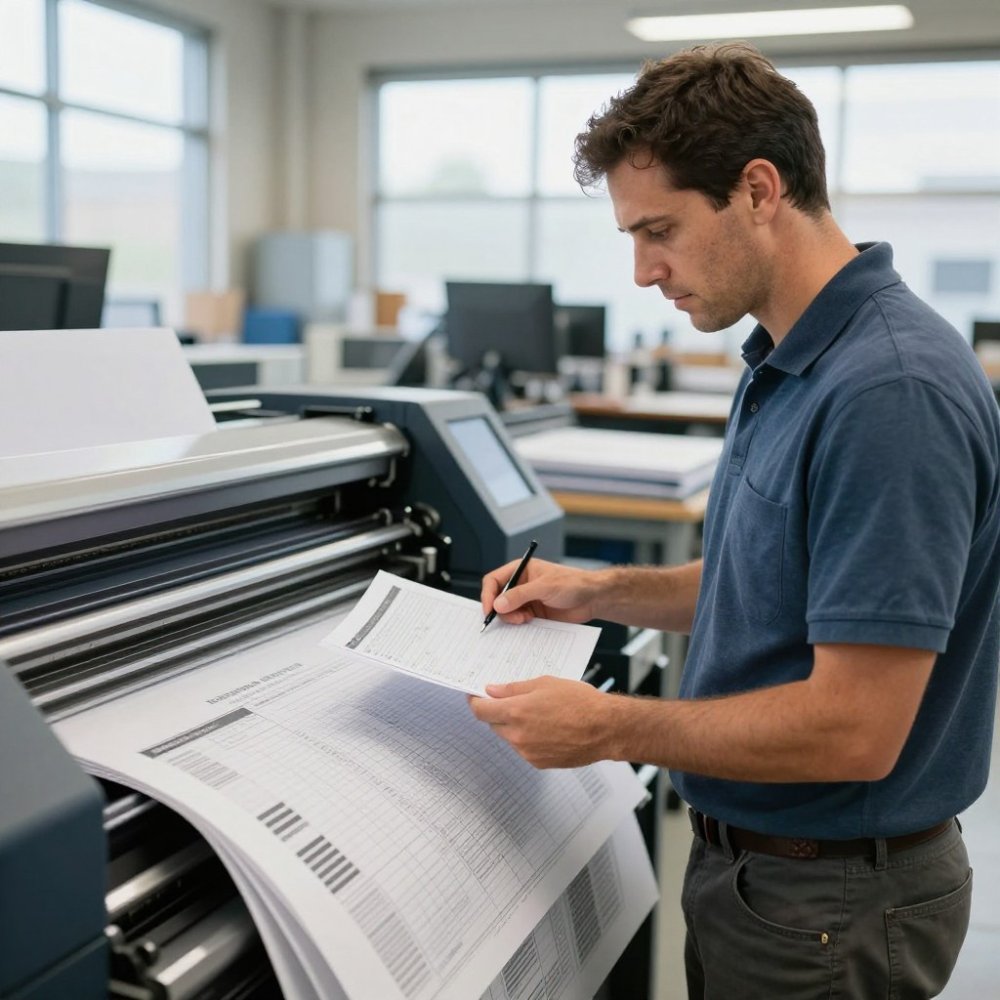
Offset schedules take longer because plates, make-ready and drying all add steps. That time is worth it on large orders where the cost savings and color consistency matter more than the calendar. If your deadline is tight, tell your printer up front. PRINTnMORE offers 24-hour rush service.
Offset Printing for Large Quantities and Multi-Location Orders
Offset is the practical choice for large quantities, such as company-wide brochures, signage packages or team apparel runs. The longer the run, the more the setup cost is spread out, and the lower your cost per piece.
Multi-location orders need planning. Confirm whether the printer can split one order across several delivery addresses, and whether the job can be reprinted with the same color match. PRINTnMORE serves corporations, schools, and sports teams, and handles both short and long runs.
Matching the Method to the Product
Quantity alone does not decide the process. The product and how it will be used often matter more.
- Brochures and flyers. Short runs and versioned promotions favor digital; large, single-version distributions favor offset once the break-even is crossed.
- Books and manuals. Page count drives plate count, so offset setup rises with length; digital suits short print runs, proofs, and titles that may be revised.
- Packaging and labels. Specialty stocks, coatings, and die-cutting usually point to offset at volume, while digital fits prototypes, short seasonal runs, and variable copy.
- Direct mail. Personalized names and offers call for digital variable data; a large, uniform mailing can justify offset.
- Business cards and stationery. Digital handles small orders and quick reprints; offset wins on large orders where color consistency across thousands of cards matters.
- Signage and display pieces. Substrate and size often decide the process more than quantity does, so confirm material availability before choosing.
A practical rule: if the design is fixed and the quantity is large, lean offset; if the content changes per piece or the run is small, lean digital. When a job mixes both, a large core run plus personalized inserts, split it between the two processes.
Planning Multi-Location and Repeat Orders
For orders that ship to several addresses, ask three questions before you commit:
- Can the printer split one press run across multiple delivery points, and what does each additional stop cost?
- Will a later reprint match the original color, and does the printer keep the plates or a color record on file?
- Does the schedule allow one production run followed by staged delivery, or does each location need its own run?
Watch out: a split-delivery order quoted as a single shipment can carry per-stop charges that erase the per-piece savings of a large offset run.
Choosing Your Printing Method and Requesting a Quote from PRINTnMORE
Use this quick decision guide:
- Under 1,000 pieces, changing content, or a tight deadline: digital is usually the better fit.
- Several thousand pieces, one fixed design, strict color needs: offset is usually the better fit.
- Mixed needs: split the job, with offset for the core run and digital for personalized or urgent pieces.
Before you request a quote, gather your quantity, final artwork, paper preference, finishing needs and deadline. Ask for an itemized quote so you can compare setup, unit cost and delivery. You can request a quote from PRINTnMORE to see our turnaround and run-length options for your project. Our team can also help you check color accuracy before you approve a run, and you can compare offset and digital costs for your branding project before you commit.
Frequently Asked Questions
Is offset or digital printing better?
Neither method is better in every case. Digital printing suits short runs, fast turnaround and variable content, because it needs no plates and has no press setup. Offset printing suits larger runs, where its per-piece cost drops as quantity rises, and where consistent color across thousands of pieces matters most. Define your quantity, deadline and finish requirements first, then compare those against each method's strengths. PRINTnMORE can review a job with you and recommend the method that fits it.
Which is cheaper, digital or offset printing?
Digital printing is usually cheaper for small quantities because it avoids plate and press setup costs. Offset printing typically becomes more economical as run length grows, since setup costs are spread across more pieces. Pricing depends on quantity, paper, size, finishing and delivery timing, so exact figures vary by job. For current prices or a quote tailored to your project, contact PRINTnMORE through its website.
What print quantity makes offset printing more cost-effective?
There is no single fixed number, because the break-even point depends on the job's paper, size, finishing, color needs and setup. As a general guide, digital is often more economical for smaller runs, while offset tends to pay off as quantities climb into the thousands. Ask your printer for a quote at two or three quantities so you can see where the cost curve crosses for your specific project.
Can digital printing match offset print quality?
Digital printing produces sharp results for most commercial materials, and for many short-run jobs the difference is not visible to the viewer. Offset printing still tends to offer stronger consistency across very large runs and more control over specialized color matching. The right choice depends on how closely your brand colors must match across every piece, so request a proof before approving a full run.